Sunday, May 30, 2021

Junshan Yinzhen Tea – The Only Yellow Tea of Chinese 10 Famous Teas

 Dongting Lake is a Chinese tourist attraction, which located in Yueyang, Hunan. Picturesque scenery here, as the inspiration source for the poets for a long time. Thanks to the excellent natural environment, plants growing strong here. An island called Junshan, a scarce yellow tea – Junshan Yinzhen tea originated here. It is said it was Chairman Mao’s favorite; they got the same hometown.

What Is Junshan Yinzhen Tea

Among all the Chinese tea, the more tender leaves tend to be more valuable. Typically, these tea’s name will with words like “Jian,” “Ya,” “Feng,” which refer to the tender buds. If the buds still retain lots of fuzz after processing tea, they will be called “Yinzhen”(silver needle.) Only one bud can be harvested from one plant every picking, so these tender tea got a low yield. Although their names are similar, Junshan Yinzhen and Baihao Yinzhen are not the same tea. The latter is a high-quality white tea, and you can know more here.

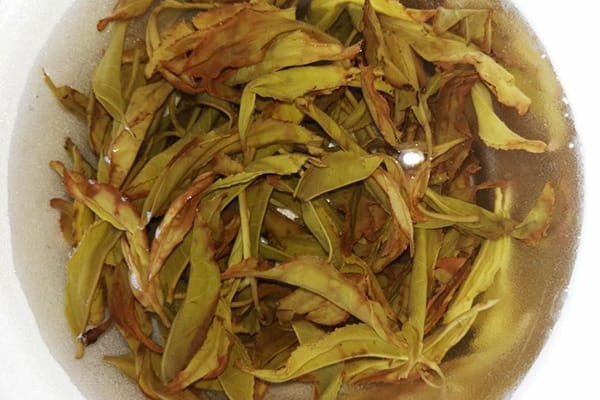
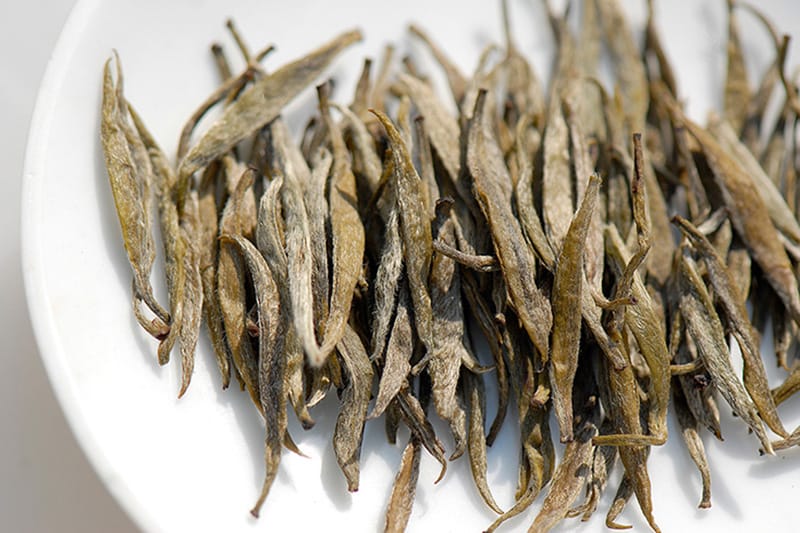
Junshan Yinzhen tea is only made from the tenderest buds, belongs to Yellow Bud Tea, looks like flat needles. The leaves are yellow-green, cover with lots of tiny white fuzz(also call “Hao“). Thus, Junshan Yinzhen is also called “gold-mounted jade.”

Junshan Island started producing tea from Tang Dynasty. But like other regions, it was only producing green tea. The Junshan tea’s earliest name is Baihe (white crane) tea.

It is said an immortal planted a tea tree here, built a temple and dug a well. Brewing the tea from the holy tree with the water from the well, the steam looks like the white crane flying high to the sky. 

The emperor like it very much and nominated the tea and the well-water as tributes. Later, the water was replaced during the journey, and the emperor didn’t see the steaming picture when making white crane tea. He was so upset and said, “the white crane is death.” What amazing is, the well thousands of miles away suddenly dry, only the tea tree left.

Of course, that is just a legend. Till to Ming Dynasty, people found that the leaves will turn yellow in a wet-hot environment during processing. If to control it well, the flavor will be greater improve; the yellow tea processing born. 

Tea masters in Junshan Island tried to produce yellow with the local source leaves, and it came to an excellent result. Later, a truth, not a legend, the Qianlong Emperor of the Qing Dynasty nominated the Junshan Yellow tea as a tribute. Every year, 9kg tea should be paid and only can make by the tenderest buds. This is the later Junshan Yinzhen tea.

China ever voted out 10 great famous tea in 1959; Junshan Yinzhen tea was the only yellow tea selected. But different from the others, only Junshan Yinzhen is not a geographically indicated product and a public brand. Yes, the brand Junshan Yinzhen is independent till now.

It is because, in 2004, the local gov ran a tea industry reform. Several units under Yueyang Construction and Investment Group Co., Ltd jointly invest set up the Hunan Junshan Yinzhen Tea Co., Ltd. It cost millions of dollars to buy out the right to use all the tea plantations on Junshan Island and the brand “Junshan.” 
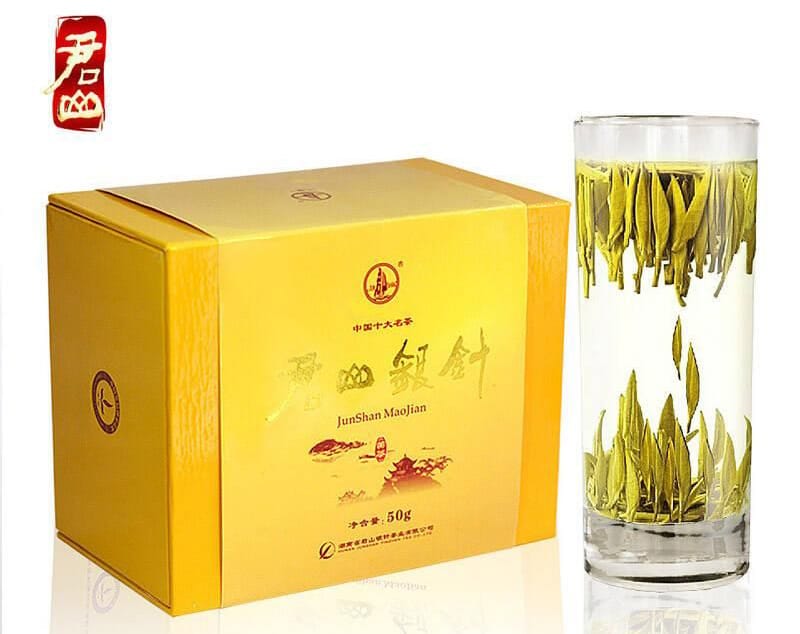
The company took the Junshan Yinzhen tea as the core product to R&D and sale. It means we do not worry about buying fake products, but the price also gets higher because of the monopoly. The company also sells a famous tea Junshan Maojian, but it’s a kind of green tea.

Worth knowing is, In Yueyang, not only Junshan Island but the tea plantations around also produce yellow tea. They ever tried to apply to the gov to make the Junshan Yinzhen into a public brand, but they finally failed. Later, a public brand, “Yueyang Yellow Tea,” came. From a development view, it a negative-sum game to both sides.

How Junshan Yinzhen Tea Processing

The yellow tea processing can’t be said complex, but it is a challenge. Junshan Yinzhen tea is more than that. It needs to keep the fuzz, which is easy to lose during processing, and without fuzz, it can’t be regarded as Yinzhen tea. 
The source leaves picking starts from about 3 days before Qingming(a Chinese solar term.) The newborn buds have the richest nutrients at this moment. The tea masters need to pick the buds gently, and they also line a soft cloth in the basket for protecting the weak leaves better.

After picking, the leaves will be through frying, placing, and first-roasting; these steps are the same as green tea processing. Only when drying, tea masters will just roast the leaves to 50% dry for the better following processing. If the leaves are too dry, they will hard to turn yellow; and if not dry enough, the final product will get a bad smell.

The following step is most important in yellow tea processing – sealing yellow. Tea masters will pack the leaves with kraft papers, 1.5kg per package. Then put them in a box, placing them for about 40-48 hours. During it, the leaves begin to oxidation and release heat. The internal substances start to transform, like the braise skill in cooking. 
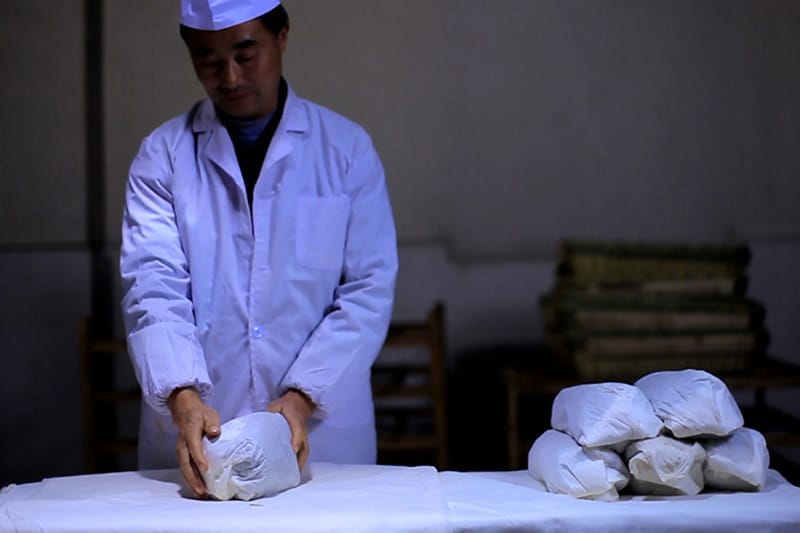
Even though it looks simple, during sealing yellow, tea masters always need to watch the packages out and fine-tuning them according to their experience. The flavor and quality of Junshan Yinzhen tea are basically formed during this processing.

Junshan Yinzhen tea will be through twice sealing yellow. After the first finish, leaves will be roasted again, cost about 1 hour, let the internal substances that had formed settle down. Then tea masters braise the leaves a second time, which cost about 20 hours, till they all become golden. Finally, dry the leaves into Junshan Yinzhen rough tea by a high-temperature roasting.

How Junshan Yinzhen Tea Taste

Junshan Yinzhen tea has a limited yield, only several hundred kilograms per year. Besides, the leaves’ quality is hard to control during processing. It is said the most high-quality Junshan Yinzhen in the year is only offered to influential officials. The products sold on the market have a relative-low quality but still with a high price.

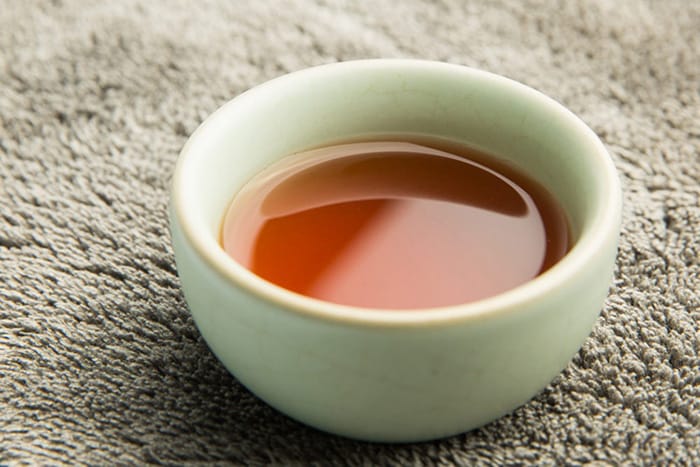
The Junshan Yinzhen tea flavor maybe not so amazing. When you unwrap the small individual package and take the leaves out, first, you can smell a mild herbaceous scent. After brewing, it sends a straw pile-like aroma. And you will become confused soon; the infusion show light-yellow, but it is too light, just like not be brewed enough. It’s exactly how the Junshan Yinzhen tea is, and you should never try to extend the steeping time or even cook it, or you will get a worse taste.

When you take a sip gently, you almost can’t feel any taste but the cooked aroma. Focus on the feeling, you will be able to feel a slightly bitter and astringent, and the fresh taste from the “Hao.” After few seconds, the tongue will feel a more delicate sweetness. You can describe the Junshan Yinzhen tea flavor with subtle and implicit. Its flavor doesn’t come as impact as the other teas, maybe more suitable for the people who got a light-taste.

Storage Method

The authentic Junshan Yinzhen tea has a small individual sealed package, which can better protect the tea from dampness and odor pollution. So all you need to do is to find a good-airtightness iron can for storing them. The storage environment needs to be dark, cool, and dry; an ordinary locker is OK. If you gonna store the tea in a fridge, it’s better to line some papers inside the iron can to prevent the damp.

The Junshan Yinzhen tea official labeled expiration date is 2-3 years. There are few cases of aging yellow tea. Typically, the yellow bud tea is recommended to finish consumption when it still fresh. After a long time of storage, the fuzz on leaves will slowly fall and lose the value.

How To Make Junshan Yinzhen Tea

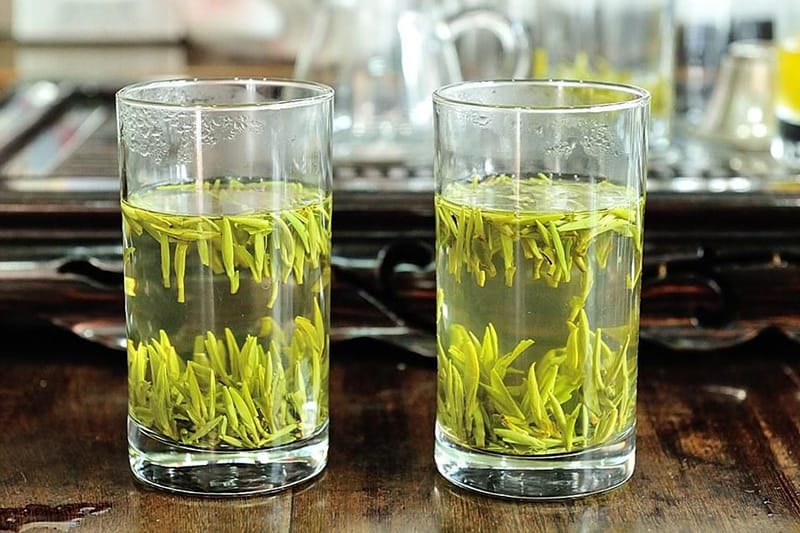
To brew Junshan Yinzhen tea is very simple. Many of the time, we are for appreciating the leaves dancing in the water.
  1. Prepare a 200ml glass cup and preheat it;
  2. Heat the water to boil, then wait for it to cool down to 85℃;
  3. Unwrap the package and put the leaves into the cup (about 5g);
  4. Add hot water just to cover the leaves, steep for about 3 seconds, and let them fully stretch. Be gentle when adding water, and Junshan Yinzhen doesn’t need to wash-tea;
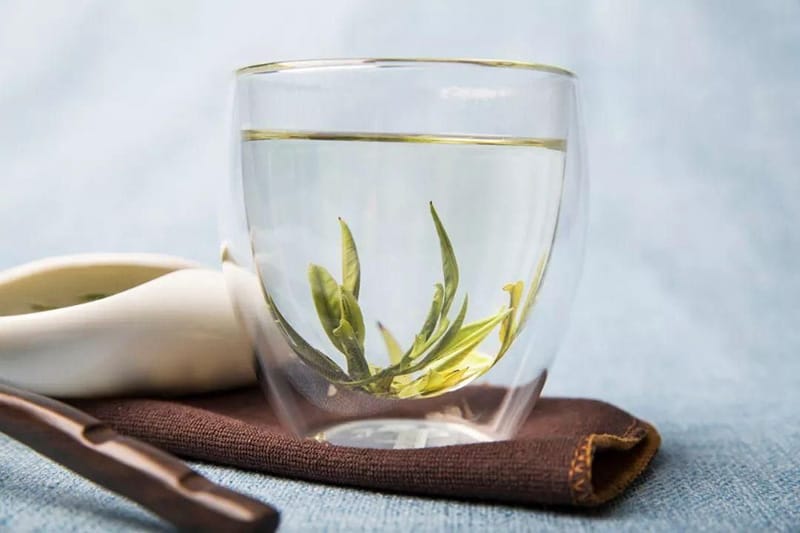
  5. Go on fill in water to 4/5 of the cup, steep for about 1minute. And this moment, you can see the leaves waving up and down just like dancing. The fall down fuzz would not make the water muddy but reflect a dazzling silver light;
  6. Enjoy;

Junshan Yinzhen tea is not resistant to brew. The second brew will be relatively light, and the third almost comes in insipidness.

Why Say Bai Jiguan Tea Helps Taoist Practice?

 Wuyi Rock teas play an essential part in Oolong, and they are famous for their unique “Yan Yun“(rock flavor.) From the description we see, this flavor is very impactful. But among them, a type named Bai Jiguan tea is totally different, either the looks and the taste. Imagine if the other Wuyi Rock teas are the strong warrior monk, then Bai Jiguan tea is just like a tender nun.

What Is Bai Jiguan Tea

Bai Jiguan tea is also called white cockscomb tea, one of the Wuyi 4 great Ming Cong(famous tea trees.) Buddhism is popular in China, and many teas are also named according to the Buddhism figure, such as TieguanyinTieluohan. But actually, Taoism is the true native religion of China. And Bai Jiguan tea is the only one regarded as a Taoist Tea.

Names Legends

Just like the other teas, about Bai Jiguan tea’s name, there is a mythological.

It is said in Ming Dynasty. A monk heard some noise outside after he finished a meditation. He out and check and found that an eagle was attacking some chicken. A hen was fighting with the eagle to protect her chicken, and she finally dies. 

The monk was moved and burry the hen’s body under a tea tree around. A year passed, the monk found that the tea tree was growing different; its leaves are white and rise like a cockscomb, shining bright under the sun. He picks the leaves and makes them into tea, and the flavor was awesome! To remember the hen, he named the tea Bai Jiguan(White Cockscomb.)

A more credible saying is, there is no myth story, this name all because of its tea trees look. Its leaves develop above the syncline, show yellow and grass. The newborn buds are lighter, close to white, and with fuzz. Leaves and buds stacked, looks like a white cockscomb from a distance.

The reason why calling Bai Jiguan tea as Taoist Tea is about a legend. It is said that the tea was developed by Bai Yuchan, a leader of Taoism. He did meditation practice in Wuyi Mountain and having Bai Jiguan tea to help coordinate breath. He finally became an immortal. The other Taoists thought the tea had a big deal with, so they all took this tea as a daily beverage and called the tea “Taoist Tea.”

Origin

Bai Jiguan tea originated in the Wuyi producing-region, Fujian; earliest be found in a bat cave in Ming. Even though it is one of the famous Oolong teas, the cultivation difficulty is hard. The seedling is also hard to survive. And it got a long growth cycle, which leads to a low yield. Tea farmers prefer to cultivate the plant which with a higher ROI, such as Da Hong Pao, Shui Xian, and Rougui. So Bai Jiguan tea is rare, the total yield in the Wuyi region is only several hundred kilograms, and the price is high.

Tea Tree Type (With Leaf Albinism )

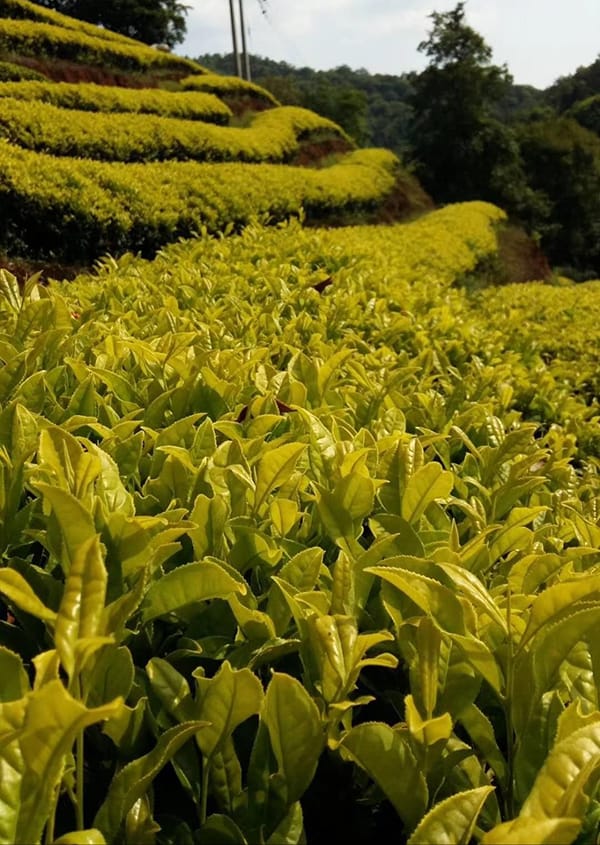
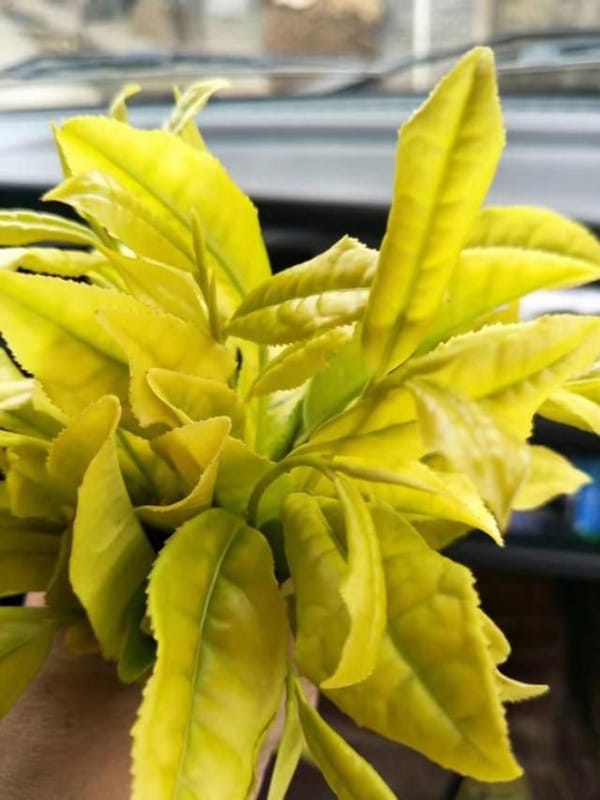
As one of the Wuyi 4 Great Tea Trees, Bai Jiguan is significantly different from the others. When you step into the Wuyi tea plantation, maybe you can not distinguish between Da Hong Pao, Shui Xian, and Rougui; but you are sure to recognize the Bai Jiguan tea tree at once. The leaves of the others are almost deep green, and Bai Jiguan’s is yellow. It is all because it suffers from a gene variation – Leaf Albinism.

Albinism is a common gene variation in plants and animals; the most we know about is the white tiger. Except for Bai Jiguan, Anji White Tea is also from a leaf albinism tea tree.

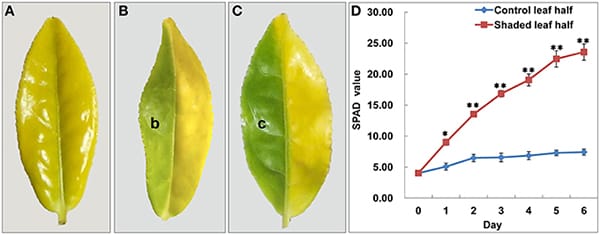
Researchers reported in 2016 that they got a conclusion according to an experiment: the Leaf Albinism on the Bai Jiguan Tea tree is related to the sunlight. The relevant genes for controlling photosynthesis will be suppressed expression under the sunshine. It affects chlorophylls and Carotenoids’ synthesis, making the leaf turn a lighter color(not totally white.) The newborn buds show a light-yellow close to white and turn yellow by growing; if without sunshine, the leaves will turn back to a regular green.

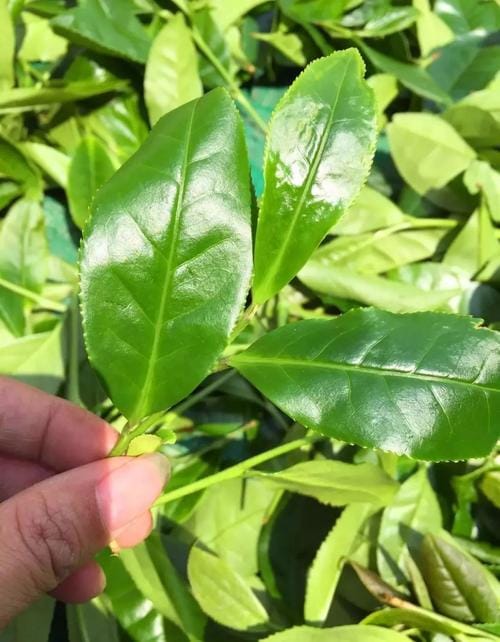
Bai Jiguan belongs to the clonal small arbor, middle-leaf Camellia Sinensis. It got a luxuriant tree-crown, leaves with less fuzz, and the sawteeth on the rim are shallow. Due to the albinism reason, it contains less tea polyphenol, which’s about 28.2%. The caffeine content is about 2.9%. By contrast, it got much more amino acid than other teas, which’s about 3.5%. So Bai Jiguan tea tastes much fresher.

Bai Jiguan Tea Processing

Bai Jiguan tea typically starts to be harvested from the middle of May; the picking standard is one bud and to the second or the third leaf. Then the leaves will be placing, sunning, shaking, frying, rolling, and roast drying to make into tea. Some steps will be repeated multiple, like shaking, rolling, and roasting.

Not only to cultivate is challenging but also the processing too. Maybe due to the albinism, Bai Jiguan’s leaves are fragile. In Oolong tea processing, shaking is an important step. Tea masters need to put the leaves on a giant bamboo sieve and shaking them again and again. Thus, the rims are broken, the juice flows out and covers the body, make the rim and the body got a different fermentation degree. And it also makes a unique feature of Oolong tea – red rim and green body.

The fragile body of Bai Jiguan easily breaks too much during shaking. It not only leads to an over-fermentation but also affects the looks. The same situation in rolling and drying; it needs a gentle operation. Thus, during Bai Jiguan tea processing, these 3 steps will be repeated multiple, and cost more time. If the fermentation and roasting are too over, it affects the tea flavor a lot.

How Does Bai Jiguan Tea Taste Like?

Bai Jiguan tea also has a large different flavor from other Wuyi rock teas. The others most are strong at floral and fruity, and with the so-called “Yan Yun”(rock flavor.) Bai Jiguan tea is with a robust herb scent. It’s different from the strengthful TCM scent of Tieluohan tea; the aroma of Bai Jiguan is gentler, like the houttuynia and honeysuckle.

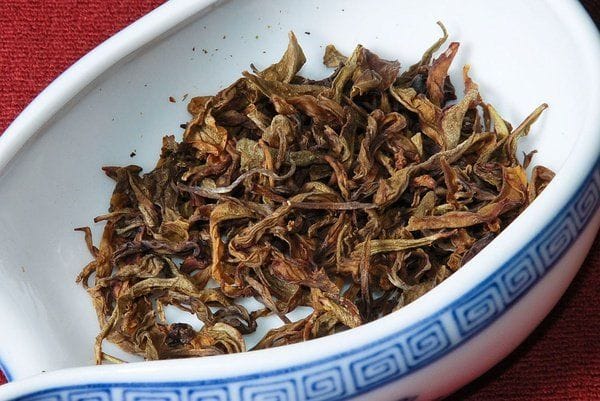
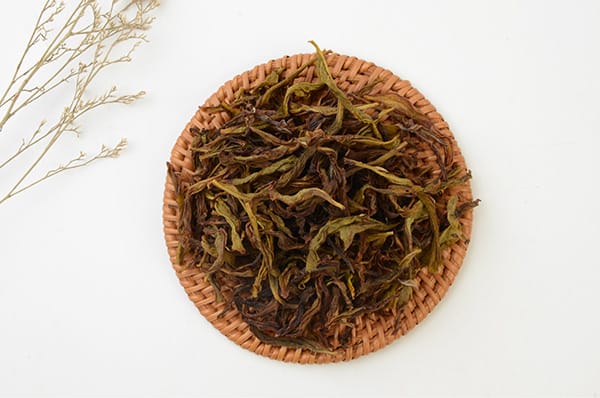
Because the source leaves are yellow and the processing is gentle, the Bai Jiguan shows a lighter color than other rock teas after making it into dry leaves. Their bodies are tight, show tawny; you can see the rim – the part with a deeper fermentation clearly. Be close and take a smell, there is a fresh, delicate, and mild aroma. If you close your eyes, you may misconceive it as a kind of herbal teas.

After you make it into an orange-color infusion, the leaves will be fully expanded, and the red rim becomes more obvious. Have a sip, a plant scent comes to your oral, with a little bit bitter and astringency, but not as strong as black tea. The rich amino acid also brings a fresh mouthfeel. Let it slid down your throat, a slight sweetness and cool feeling will appear on your tongue root, and the aroma also lasts a long time.

Maybe due to the albinism plant’s unique feature and the caffeine effects, you will feel your blood flow boosts quickly, even sweat, as relaxed as enjoying a massage—no wonder the Taoists take Bai Jiguan tea as a daily drink for better detox and meditation.

Storage Ways

We’ve talked before, the Bai Jiguan leaves are fragile, which need to be processed gently. After they are dried, they become more fragile because of roasting. Even though the product has a separate sealed package, you also need to be gentle when moving it or find it all broken after opening the package. And to the loose-leaf, they will easily absorb the water in the air, get a damp smell, or even mold.

Most of the teas need a dark environment during storage. Bai Jiguan tea requires higher; it got more sensitive to the sunlight because of the albinism genes. The part with a lower fermentation may change flavor in a short time by the sunniness. Besides, the requirement on temperature also high, which needs to be relatively cold. Bai Jiguan tea got a short shelf life and not suitable for aging; it’s better to finish consumed in half a year.

During Bai Jiguan tea storage, pay attention to the following:

  • Dry
  • Dark
  • Low-temperature (lower than 20℃)
  • low oxygen environment

A recommended method is: if it got separate sealed packages, put them into an iron can with desiccant, then store them in a fridge. If it is loose-leaf tea, pack it well with rice paper, then put it in a clay can, and store it in a dark, dry, cool place but not a fridge.

How To Make Bai Jiguan Tea

  1. Prepare and pre-heat the teawares. A 120ml porcelain Gaiwan seems to be excellent;
  2. Put 10g leaves in, add hot water, cover, then pour out the wastewater soon. Pay attention, when adding water, pour it at low, to avoid the violent flow breaks the leaves;
  3. Refill 95℃ water, cover, steep for about 10-20 seconds;
  4. Pour the infusion in a fair cup to equal the concentration;
  5. Serving;

Even though Bai Jiguan’s flavor is largely different from other rock teas, it still got the characteristic of resistance to brewing. Typically, it can be brewed over 7 times, some high-quality products even over 10. After the third brew, you can extend 5-10 seconds steeping time every following according to the infusion concentration.

Tieluohan Tea – The Oldest Of Wuyi 4 Great Oolong Tea Trees

Fujian is the largest Oolong tea-producing region, and the products are divide into two genres – Minnan and Minbei. When we are talking about Oolong, we can’t miss them, especially Wuyi Rock Tea. There are Four Great Oolong Tea Trees in Minbei, one of them has a domineering name – Tieluohan. It is said Tieluohan tea is the one with the longest history; maybe it can show the “rock-flavor style” thoroughly.

What Is Tieluohan Tea

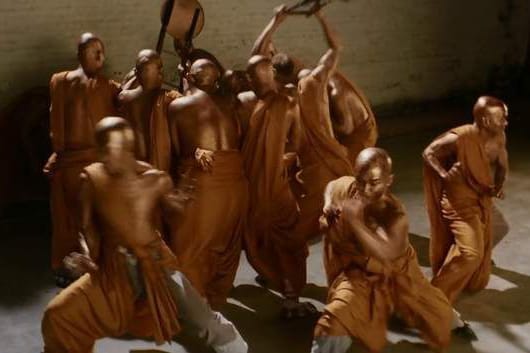
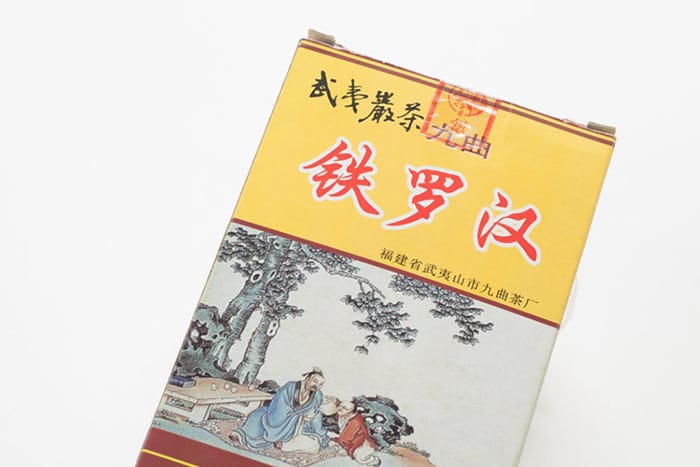
Tieluohan tea is also called Tie Luo Han. In Chinese, Tie means iron, and Luohan refers to the Arhat. What is an Arhat? People who ever studied Buddhism know surely, the Arhat is the apprentice of the Buddha, a total of 16, 18, or 500 guys(different denomination has a different saying.) They are the Buddhists who practiced to the highest level; it can be interpreted as a demigod. Of course, in most people’s impression, the Arhat typically refers to the monk in Shaolin Monastery with the strongest Kongfu and being a guard. So you can realize its flavor must be very robust and strengthful from the name Tieluohan.

Names Legends

About the name Tieluohan tea, there are 3 legends.

Story 1. A long time ago, a monk name Ji Hui was good at processing tea. The monk is tall and strong and with black skin because of the daily farm work, which looks like the Arhat in the picture. So, the folks around call him Iron Arhat. One day, he stepped into Wuyi mountain again. At Feng Ke Pit’s gap, he found a tea tree, growing as strong as himself and with soft leaves. He picks it and brought it home, processing it into tea. Folks fell in love with the tea after drinking it, so they named it with his nickname.

Story 2. This story sounds normal and like a business promotion. It is said that at the old time, a merchant named Shi starting a tea shop in Minnan specialize sold loose tea from Minbei. At that time, two rat plagues outbreak in a short period, many people died. Shi offered his teas to the patients for free. Just like other teas originated stories, the great health benefits of the tea cured many patients. People thought these teas are gifts from God, so call it Tieluohan tea.

Story 3. This one is the most marvelous. It is said that the Queen Mother of the west arranged a party on the heaven and invited the Arhats as guests. One of them was drunk and dropped his weapon, a branch, to the ground. An old farmer picked it. At night, the Arhat came to the farmer’s dream and said: If you cultivate this branch well, it will grow into a great tea plant, and its leaves can cure every disease. Then we can guess what happened at the end of the story.

History

We can not figure out the truth of the legends. But according to the Wuyi region historical documents, Tieluohan is the first Great Tea Tree was found, even earlier than Da Hong Pao. It was discovered in Tang, got a little fame in Song, then became a trend in Qing Dynasty.

Tieluohan tea’s popularity may thank a tea master from Quanzhou, Fujian; He also called Shi. I thought the second story might be about his company. He was running a tea shop in Quanzhou, specialize sold Tieluohan tea. Because of the excellent and unique flavor, Tieluohan tea became popular soon. It was more than it, due to many people went to Southeast Asia as laborers, the tea also spread there; native there are also fell in love with the tea because of the awesome health benefits. It sounds like Liu Bao tea‘s story, but the difference is, Tieluohan tea is still prevalent in China.

Tree Variety and Processing

There are four great Ming Cong(famous tea tree) in Wuyi Mountain(plus Da Hong Pao, there are five.) They are Bai Jiguan(white cockscomb,) Ban Tian Yao(midair monster,) Shui Jin Gui(Water Golden Tortoise,) and Tieluohan.

Tieluohan was discovered in the Inside Ghost Cave of Huiyuan rock in Wuyi Mountain; some similar plants also grow in Zhuke rock and Matou rock regions. It belongs to Clone Shrub, middle-leaf Camellia Sinensis. Since the 1980s, the Tieluohan tea tree cultivating scale has been expanded; you can see it in many tea plantations.

The Tieluohan leaves’ characteristics are apparent. When it still be a tender bud, it shows yellow-green, soft, thick, and with lots of “Hao.” After it grew into a leaf, it becomes flat, thickening, and crisp. You can see the unsharp sawtooth on the rim, and the fuzz also becomes less.

Harvest starts in the spring; the first flush picking takes one bud to the second leaf as standard. At this moment, the leaves contain about 2.9% amino acid, 29.7% tea polyphenol, and 3.7% caffeine. April, the yield increase to the highest, tea masters will take one bud and to the third or fourth leaf as standard; every square in the tea plantation can output about 30kg teas.

The leaves after picking will be processed into a tea by the following steps:

  • Placing
  • Sunning
  • Shaking
  • Frying
  • Rolling
  • Roast drying

Among them, shaking and frying are the most essential steps of Oolong tea processing. Shaking is for breaking the rim of leaves, making the juice flow out, and leads to a different fermentation degree; that is Oolong tea’s primary characteristic. Frying is for stoping the leaves from fermenting and makes the internal substances transform. The leaves from the great tea trees can develop various flavors by a senior tea master shaking and frying.

Tieluohuan leaves have excellent heat resistance, which makes them can be roasting at a high temperature so that the flavor will become more mellow and plump. The robust TCM(traditional Chinese medicine) scent and the so-called “Yan Yun” (rock flavor) are the Tieluohan tea’s primary aroma.

How Does Tieluohan Tea Tastes Like?

Unlike the Minnan Oolong, such as Tieguanyin tea; the Minbei Wuyi Rock Tea got more mature fruity but less fresh floral. And Tieluohan tea got the most shooting flavor. Just like its name, strengthful, tegrity, and mild.

When you unwrap the package, you will found that the Tieluohan leaves are thick, strong, intact, and long, with less crimp. They show dark-brown because they had been deeply roasted. The overlook is really like a Shaolin Monastery warrior monk, giving a stately feeling. And at this time, you may already smell its unique wood-like aroma.

In the Gongfu Tea Ceremony, there is a step special for smelling the dry leaves’ scent. Pre-heat a Gaiwan first, put the leaves in, cover and braise for a while, then open the lid and have a smell. 

If you feel it carefully, you may find the aroma is just like the perfume, which has a structure. The top notes is a rich TCM scent with delicate fruity and slight caramel; the mid notes is the unique Cong Aroma(wooden smell) of Wuyi Rock Tea; the base notes is the old-tree-like, a bit spicy and herbaceous fragrance.

You can’t wait to brew the Tieluohan tea. From a glass fair cup, you can see the infusion is like the liquid amber, bright and thick. The strong TCM scent comes at this moment, smells like the Angelica Sinensis. Having a little sip, the herbaceous fragrance will make you be a mistake for thinking it is TCM, but it is not bitter and astringent. At the same time, you will feel a mineral-like and firewood-like flavor; this is the so-called “Yan Yun”(rock flavor.) This feeling can be described as mild, quiet, and calm.

After the infusion slides down your throat, the characteristic “sweet return” of high-quality tea comes. Floral, fruity, and medicine scent all come and hit your oral, and left a slight sweet in your tongue. Associate with the tea’s name, this feeling is like being in a temple and listening to the monks reciting soul-cleaning sutras.

Tieluohan tea is deserved you a try!

Storage Ways

Tieluohan belongs to partially-fermented tea. Even though some people also aging the Tieluohan tea like dark tea. But, Tieluohan has been deeply roasted; In Chinese Traditional Thought saying, it is with lots of “heat,” specifically, it means the unique “Yan Yun” of rock teas. As time goes, this flavor will lose gradually, which is the so-called”anneal.” The Tieluohan tea without Yan Yun is just like lost the soul. If you are doing wrong in the aging process, the loss will be more significant.

However, compared with the Qing-flavor type Tieguanyin tea, Tieluohan tea doesn’t need to be finish consumed ASAP; like the Strong-flavor type, it can be store for about 2-3 years. During the storing process, pay attention to the followings:

  • Dry
  • Dark
  • A relatively low-temperature (about 27℃)
  • Airtight

Because Tieluohan tea is with “heat,” it can not be allowed to store in a fridge like Tieguanyin; The heat and the cold will be neutralized and break the flavor. Thus, typically keep it under an average temperature is OK.

Generally, an iron-can with excellent airtightness performance will be awesome to store Tieluohan tea; their name also matches. But the metal smell of iron-can may pollute the tea’s flavor; you need to put the leaves in a sealable aluminum package first.

Related ReadingChoose the best tea storage container for loose leaf tea.

How To Make Tieluohan Tea

Tieluohan tea has a deep fermentation degree and has been deeply roasted; it got the Wuyi Rock Tea’s primary feature – resistance to brewing. You can even cook it.

  1. Prepare and pre-heat the teaware. A 150ml porcelain Gaiwan will be a good choice;
  2. Put 8-10g Tieluohan loose leaves into the Gaiwan, add hot water, cover, then put out the wastewater soon;
  3. Refill over 95℃ hot water, cover, steep for about 8-10 seconds;
  4. Pour the infusion into a fair cup to equal the concentration;
  5. Serving;

After the fifth brew, you can extend about 5 seconds for every following brew according to the infusion concentration.

After the third brew, you can keep making Tieluohan tea in a cooking way.

  1. Prepare a cast-iron teapot, fill water to 2/3, heat it to boil;
  2. Transfer the leaves in Gaiwan to the teapot, keep heating for about 30 seconds;
  3. Serving;
  4. Every following brew can extend about 10 seconds heating time;